


We are so excited to have two steam engines joining us this year. Located in the Demonstrations area you will see, hear and smell the unmistakable presence of these lovely vehicles. Make sure you catch them as they parade around the Demo area in their full glory
The steam engines are not just beautiful to look at, but they are also a marvel of engineering. The intricate details and mechanisms of these machines are a testament to the ingenuity of their creators. As you watch them chugging along, you might wonder how they work and what it takes to keep them running.
But the steam engines are not just a relic of the past; they still have a place in the modern world. Many industries still rely on steam power, and the technology has been adapted and improved over the years.
So, take a moment to appreciate these marvels of engineering and the history they represent. And don’t forget to snap a photo or two as they parade around the Demonstrations area!
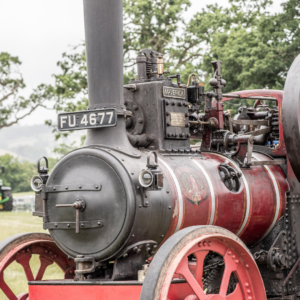
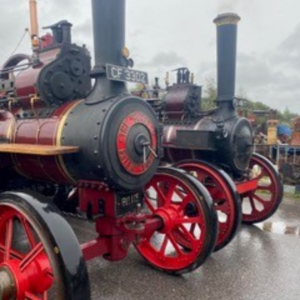
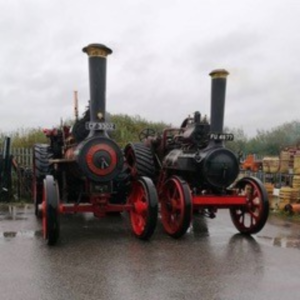
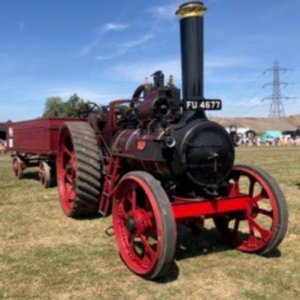
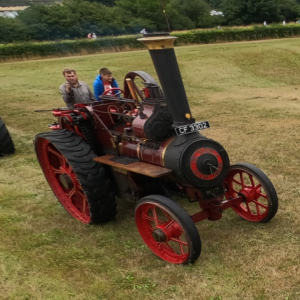
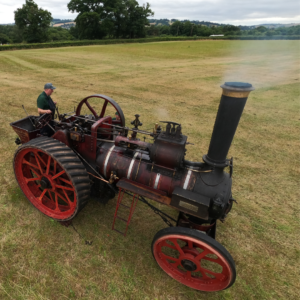
Marshall 79441 ‘Maverick’ is owned by Sean Anthony and family of Berrybrook Steam & Classics, Exminster, nr Exeter. It is a 1925 single cylinder, general purpose traction engine built in Gainsborough and spent its life working near Doncaster. It was a special order for display on the Marshall stand at the 1925 Royal Show in Chester. It was supplied following the show to Coulsons threshing contractors and was owned by them until around 1950 when it was sold to the Selby family. We purchased it in 2017 and are the third owners from new.
Burrell 1861 ‘Billie’ is owned by David Nicholson and family of Newton Abbot. It is a 1895 single crank compound, general purpose traction engine. Originally order for Scotland in 1895 but the order was cancelled before delivery. The engine was bought by a farming contractor in Suffolk where it spent all its working life, changing hands only two or three times. Purchased by present owners in 1987 requiring a complete rebuild. Restored and maintained by the current owner and believed to be the oldest complete, surviving example of Burrell’s Single Crank Compound design.